01 — THE ORIGIN
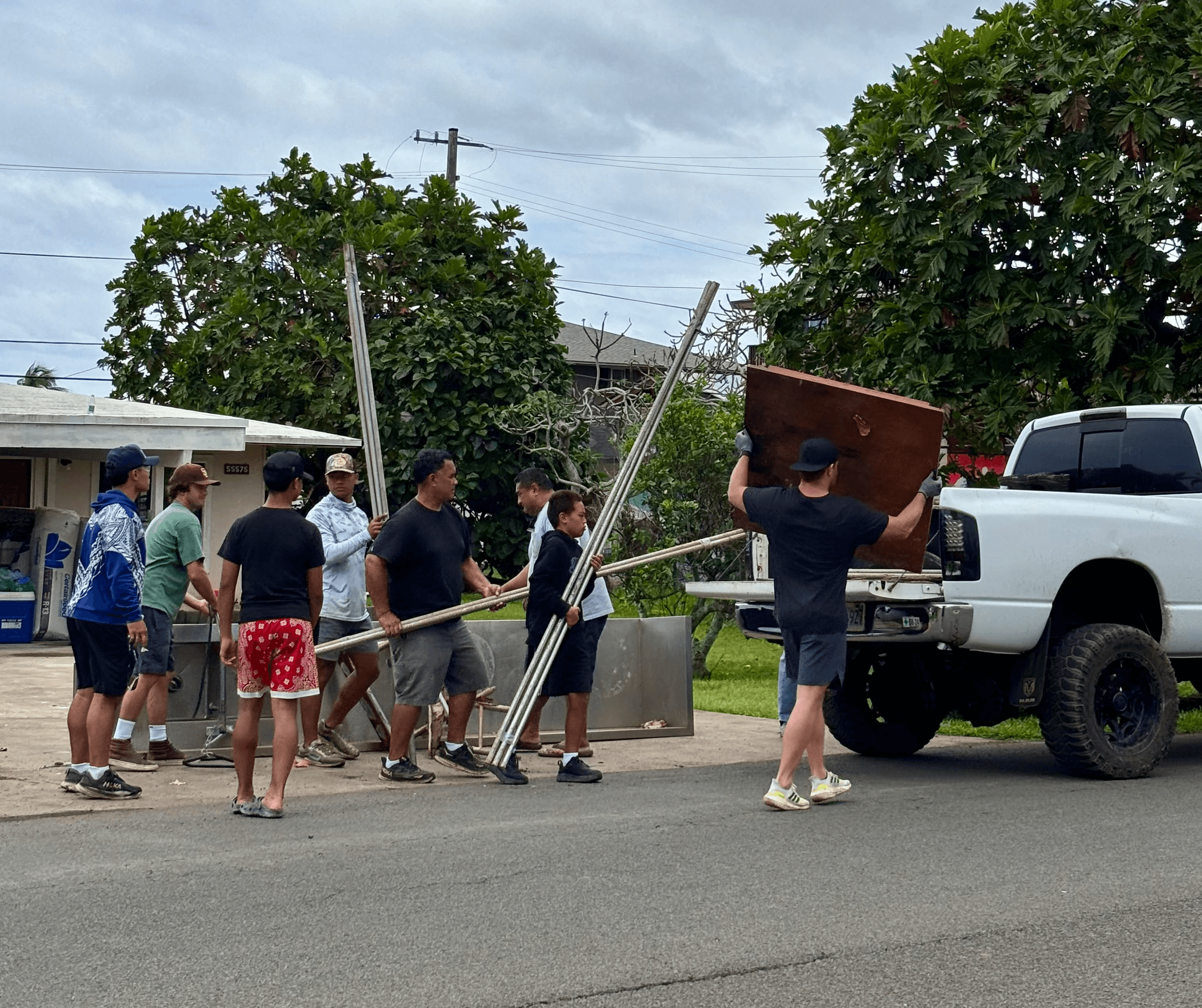
In March 2026 the Kona Low storms flooded homes across my neighborhood in Laie. I walked through with a pair of gloves and helped where I could. I talked to homeowners face to face, in their grief, in the middle of everything they'd lost. The message I kept hearing was the same:


02 — THE PROBLEM
Hawaii's local economy runs on people with the least protection. Farmers, makers, artisans — selling through Instagram DMs and weekend markets with no real infrastructure underneath them. And the threats keep coming.
Every time a disaster hits, the sellers with the least visibility and the weakest infrastructure are the ones who don't come back.
THE SELLER
Too small for big platforms. Instagram DMs and weekend markets — that's the whole infrastructure.
THE BUYER
Wants to buy local. Walks away because of price. The fallback isn't discovery – it's the cheaper option.
The problem isn't that people don't want to support local. Most do. The problem is there's no reliable place for that intention to turn into a real transaction — especially when things get hard.
03 — THE RESEARCH
01 - In-Person Interview
My first interview was with Amy, a mom in my kids' homeschool group my wife connected me with. She runs a farm in Kahuku and sells plants, balms, and ointments at storefronts across the island. Her biggest challenge wasn't making great products. It was getting in front of consistent buyers outside of scheduled markets.
WHAT I DID
I only informally spoke with her as I asked her open-ended questions trying to understand her experience and took notes. I also had her walk through a simple prototype built by Claude as a light usability test while we talked. She moved through it confidently, with a few brief pauses on the seller dashboard.
WHAT I HEARD
Her biggest challenge wasn't making great products. It was getting in front of consistent buyers outside of scheduled markets and storefronts. One thing I didn't expect: she brought up the idea of ranking sellers by Kama-aina or native status versus transplants. It wasn't just a feature idea. It was a signal that trust and cultural identity matter more to buyers here than algorithmic ranking or paid placement.
WHAT CHANGED
I noted Amy's enthusiasm but also flagged that she knew me personally, which means her feedback was likely warmer than a stranger's would be. One interview is not a pattern. I kept going.
"Cultural identity matter more to buyers here than algorithmic ranking or paid placement."
02 - Social Media
WHAT I DID
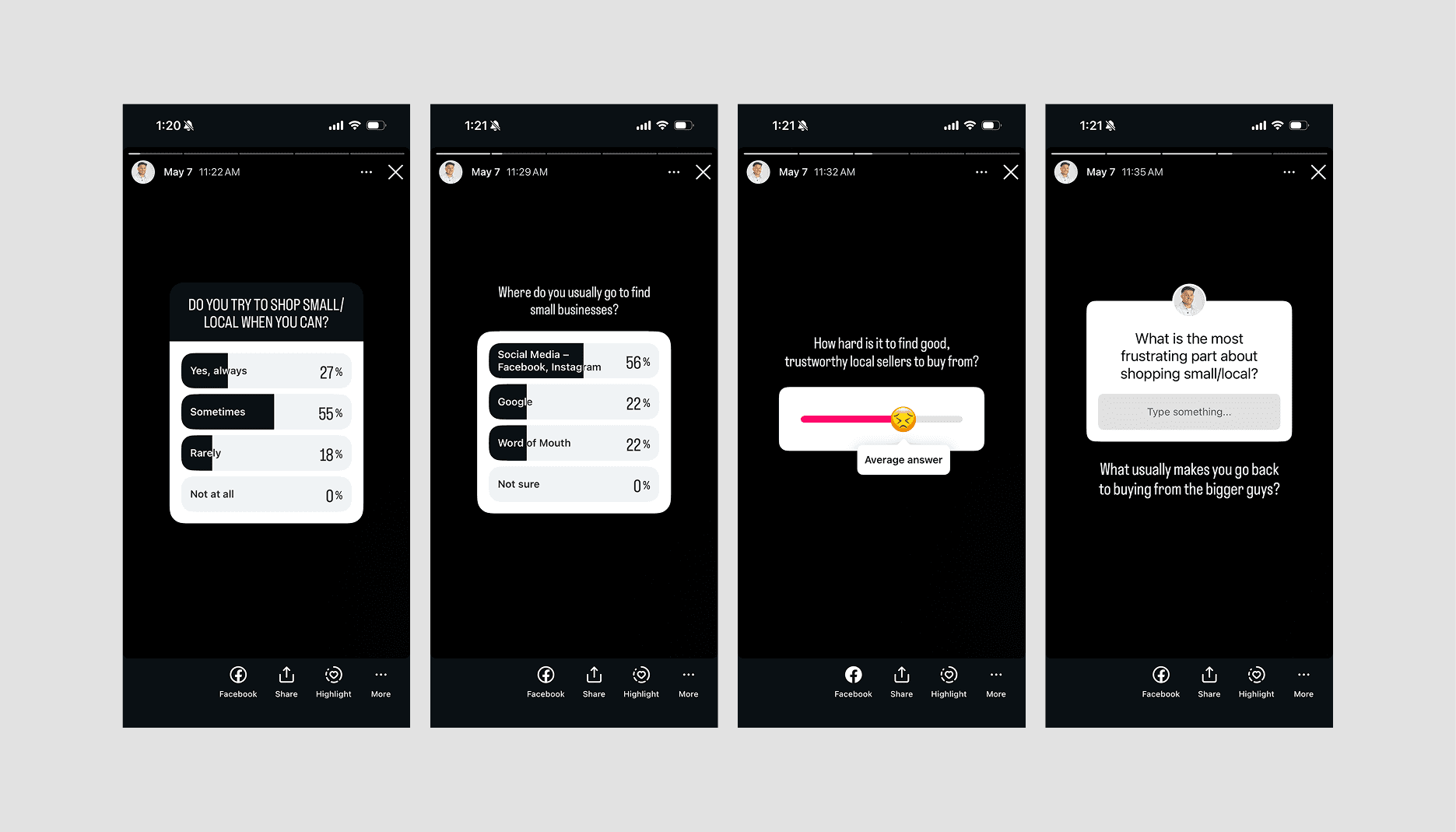
I ran a 5-slide Instagram story sequence targeting buyers in my network. Over 200 views, low engagement. I didn't treat it as a reach problem. I treated it as a copy problem and adapted. I rewrote the ask, stripped the jargon, and posted in two Facebook groups — All Things Oahu and the Laie community group — with a more grounded, conversational approach.
WHAT I HEARD
I went in thinking the core problem was discovery. Buyers couldn't find local sellers. The data told me something different. Buyers could find local sellers just fine. They were walking away because of price. The fallback wasn't more searching. It was Amazon. That's a meaningfully different problem. A discovery problem means the supply is invisible. A price problem means the supply is visible but the value isn't landing. For a moment it made me question whether Kama was worth building at all.
WHAT CHANGED
The price finding reframed the whole product. But it also opened a new question — was price the whole story, or was convenience part of it too? That went into the Google Form.
03 - Google
WHAT I DID
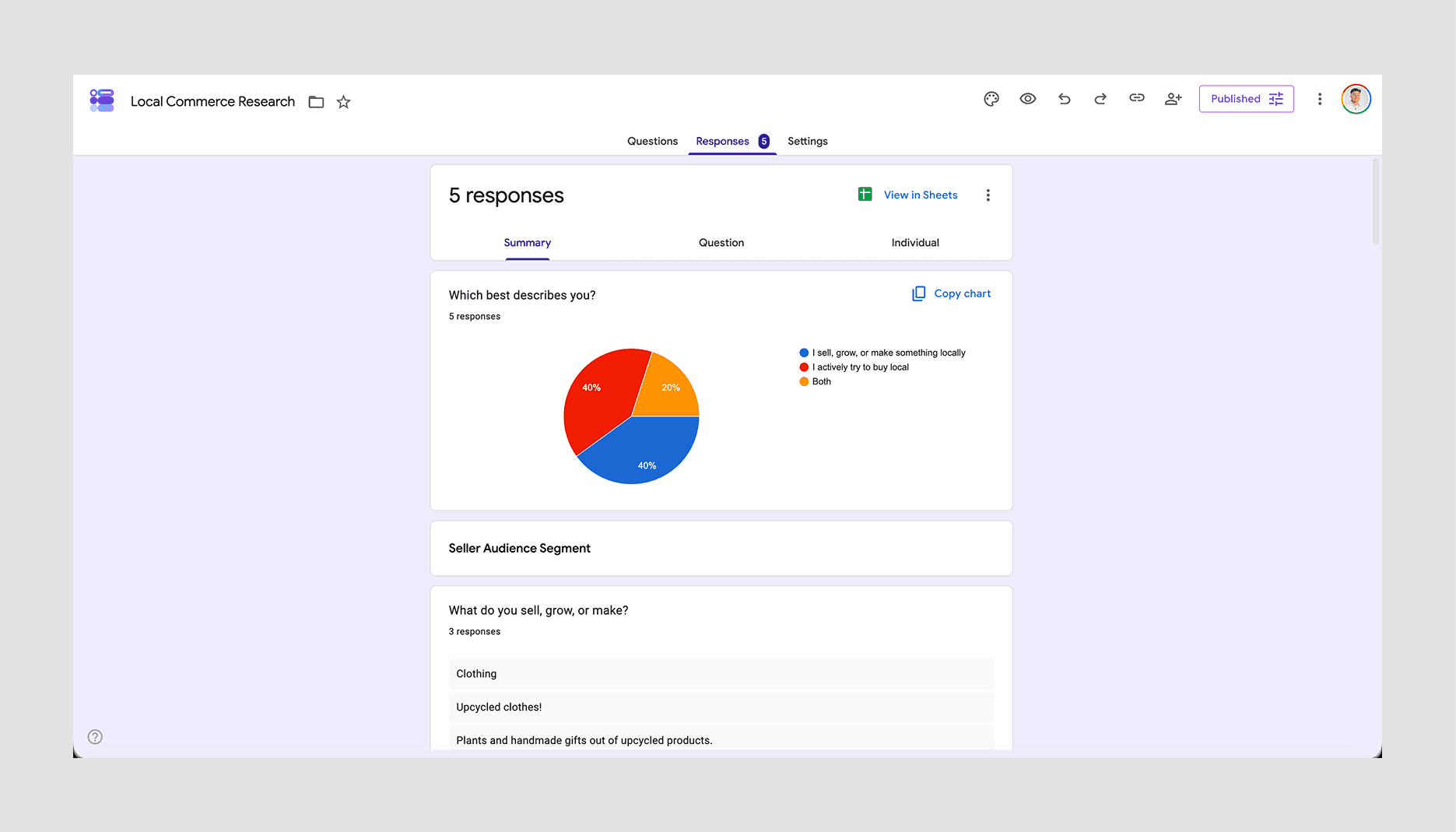
I built a two-segment Google Form — one path for sellers, one for buyers — and distributed it through my network and local Facebook groups. Five responses came back. Small sample. But the patterns were clear enough to act on.
WHAT I HEARD
On the seller side, all three said their biggest challenge was finding enough customers, not making enough product. Two out of three had never run out of stock. One seller flagged something I hadn't fully accounted for: demand is tied to tourist season. When visitors leave, sales slow. That's not a discovery problem. That's a seasonal infrastructure problem.
On the buyer side, both defaulted to Amazon or big box when price stopped them. Neither planned ahead. One response stopped me cold. A buyer near Laie wrote that there are almost no farmers markets near Kahuku, that it's hard to pay more when you're already financially stretched, and that if local prices were closer to Foodland she would buy from a local farmer every time.
WHAT CHANGED
That one response reframed something important. The tourist-as-primary-buyer model I'd been working from assumed the buyer could absorb the price premium. But the people living closest to these sellers often can't. Kama might need to think about two different buyer modes: visitors who can pay more, and locals who want to but financially can't.
04 — THE REFRAME
A tourist who knows their $40 jar of honey is keeping a Kahuku family on island will pay the $40. That same buyer standing in Costco next to a $12 jar with no story attached won't. The difference isn't the honey. It's the transparency, the connection, and the trust.
MY PREVIOUS HYPOTHESIS
Kama is a discovery feed. Buyers can't find local sellers.
WHAT CHANGED
Sellers not only have hard time finding buyers but buyers walk away because the value isn't landing.
"Kama isn't a cheaper way to buy local. It's a more meaningful way to buy local."
05 — KEY DECISIONS
Trust + payment
PROBLEM
How do two strangers trust each other enough to complete a transaction?
SOLUTION
Escrow model held until buyer pickup. Code releases funds.
VALIDATE
Does escrow feel reassuring or overcomplicated? Needs usability testing.
Starting in Hawaii
PROBLEM
Where do you launch to give both sides the best chance?
SOLUTION
Validate on North Shore first — embedded community access.
VALIDATE
Does what works in Hawaii translate to other markets?
Ranking Native Locals Against Algorithm
PROBLEM
How do you prevent transplants from dominating seller visibility?
SOLUTION
Ranking that factors Kama-aina and kanaka status alongside reviews.
VALIDATE
Verification process, legal exposure, buyer reaction. Most unresolved idea.
06 — THE PROTOTYPES
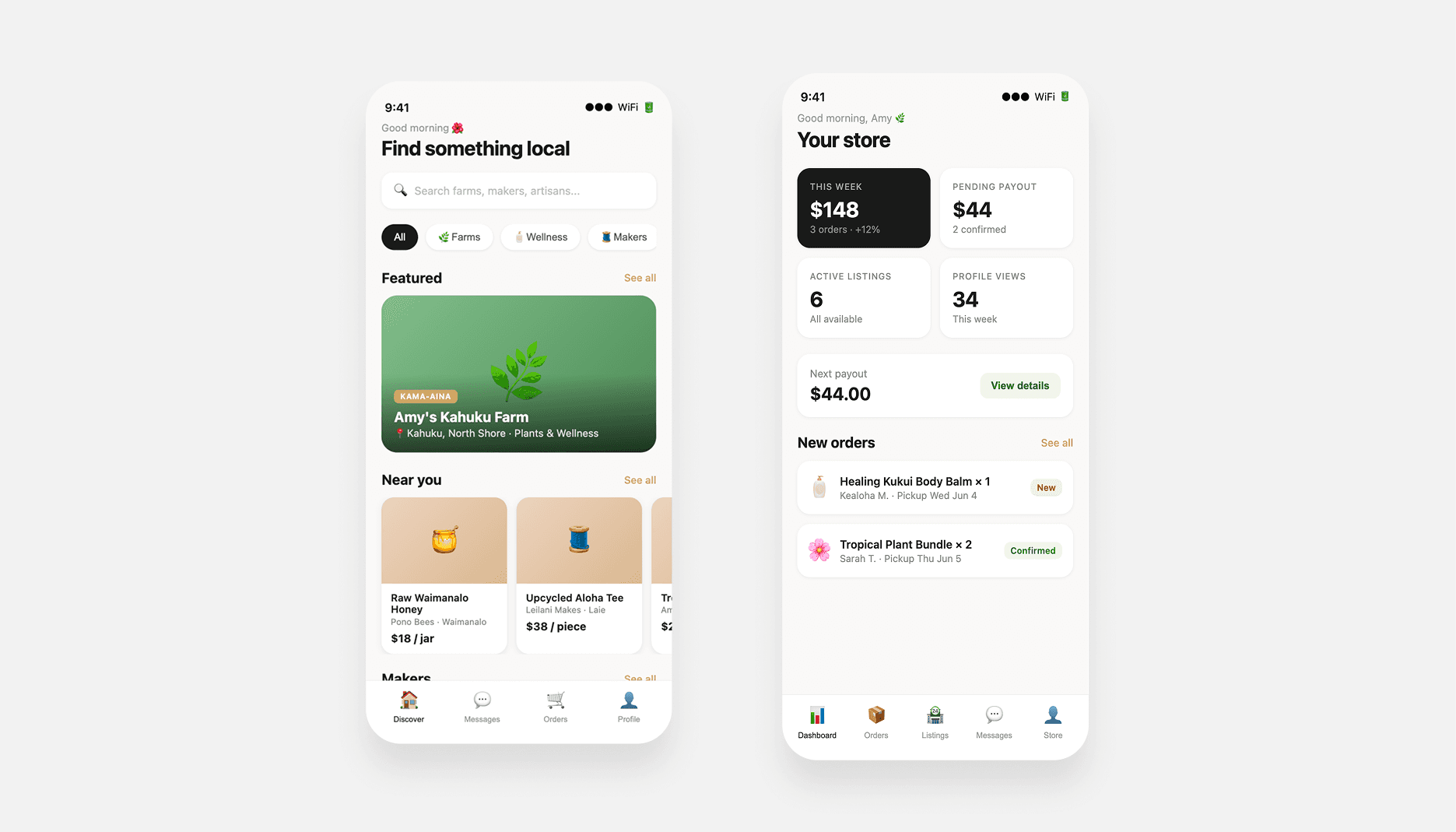
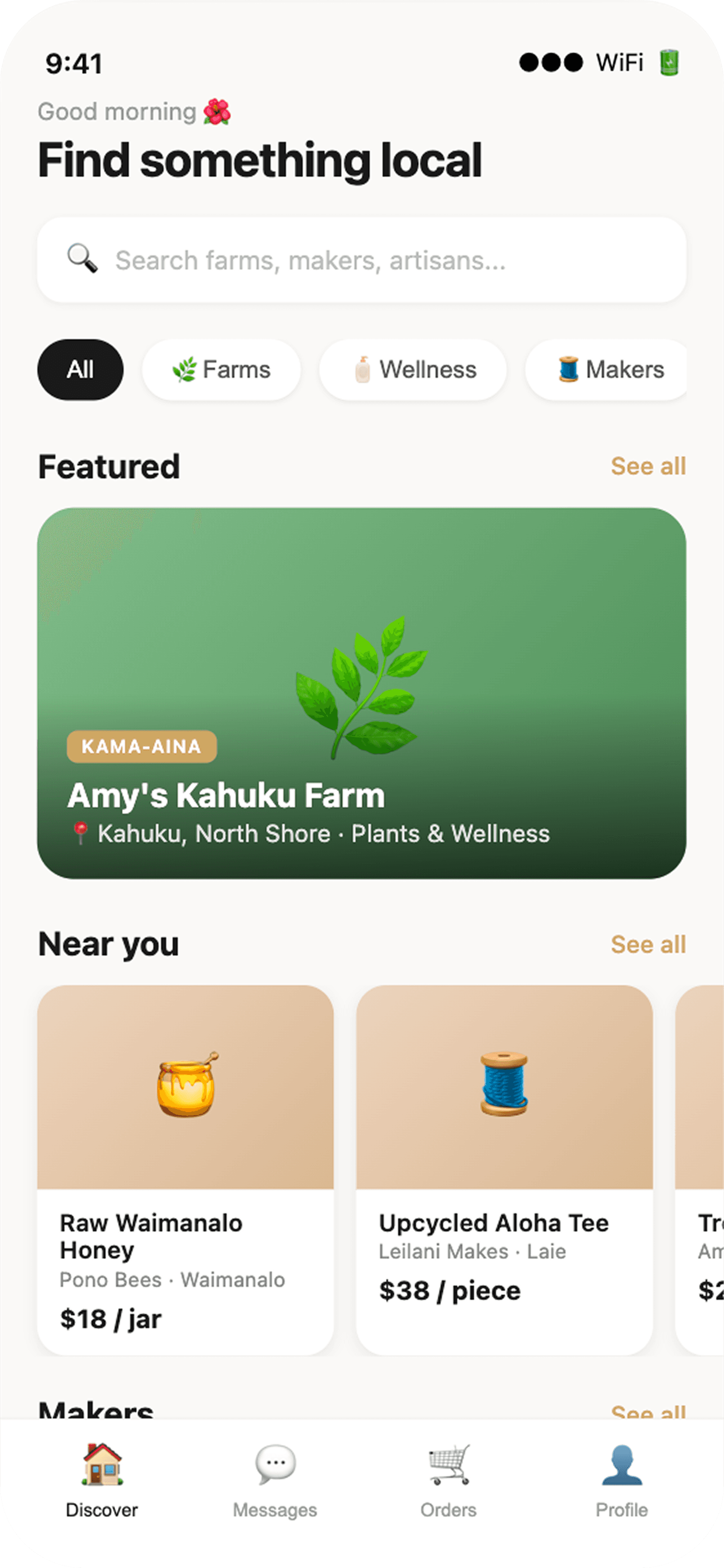
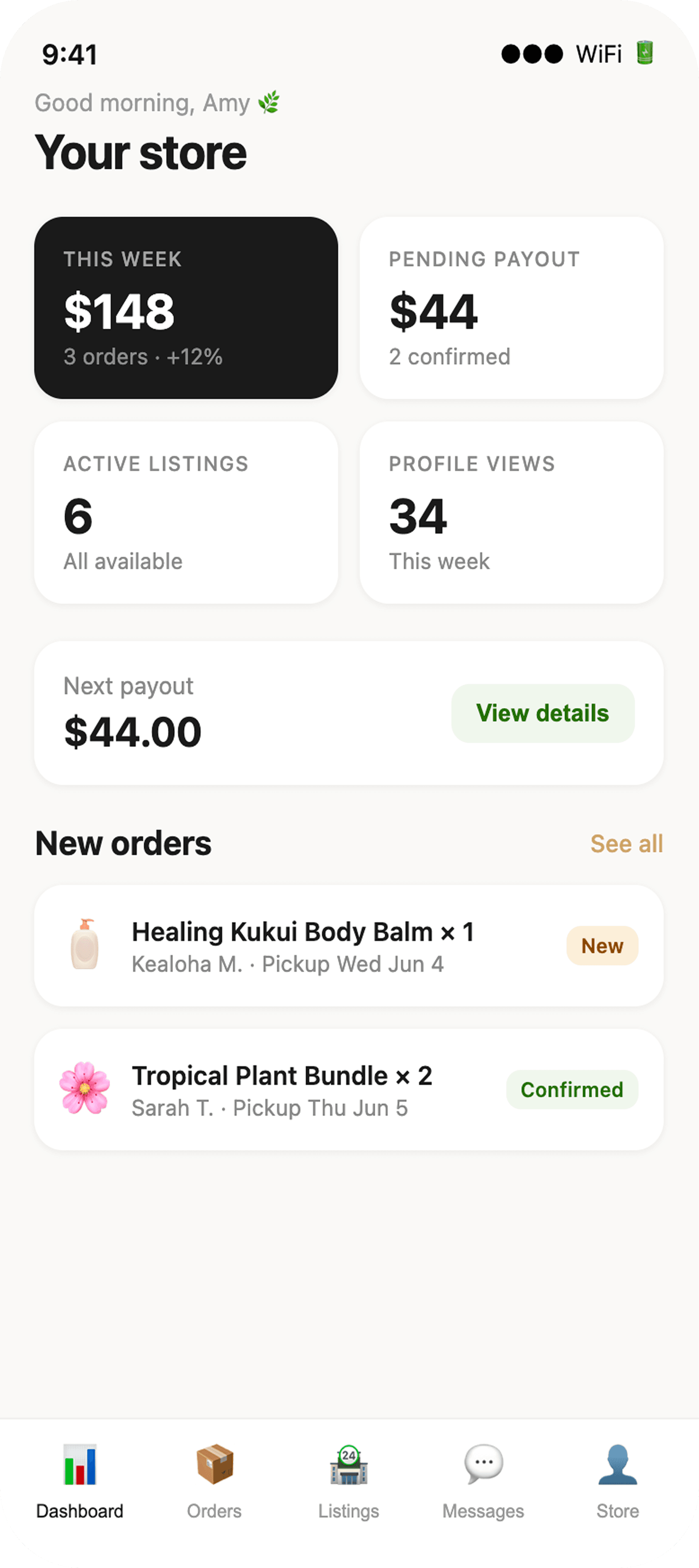
These prototypes didn't start in Figma. I described my thinking out loud — the problem each screen needed to solve, the reasoning behind each decision, the flow I was proposing — and used Claude to build them in HTML in real time. Two fully clickable prototypes, buyer and seller, in hours instead of weeks.
That wasn't a shortcut. It was a deliberate choice. I didn't need pixel-perfect UI. I needed something real enough to put in front of users and learn from. Getting there fast meant I could spend my energy on the thinking, not the execution.
This is how I intend to work. AI as a collaborator, not a replacement for judgment.
BUYER APP
SELLER APP
07 — WHAT'S NEXT
COMPLETED
Problem framing
Seller interview
Social research
Google Form
IN PROGRESS
Widening buyer interviews
Testing pickup model
UX Certificate Course 4
NEXT
Usability study
Hi-fi Figma (Course 5)
Validate or pivot
What I actually want to find out is whether this works. Not just as a product but as something that changes a real outcome for real people.
I want Hawaiian makers and farmers to earn a living without giving up their homeland. I want the family running a farm in Kahuku or selling balms out of their kitchen in Laie to have a place where their work finds the right buyer without needing a marketing agency, a viral TikTok, or an Instagram presence that takes as much work as the thing they actually make.
I don't believe in handouts. I believe everyone has the right to earn from their skills and hard work on their own terms. What I'm trying to find out is whether Kama can be the infrastructure that makes that possible.
08 — REFLECTION
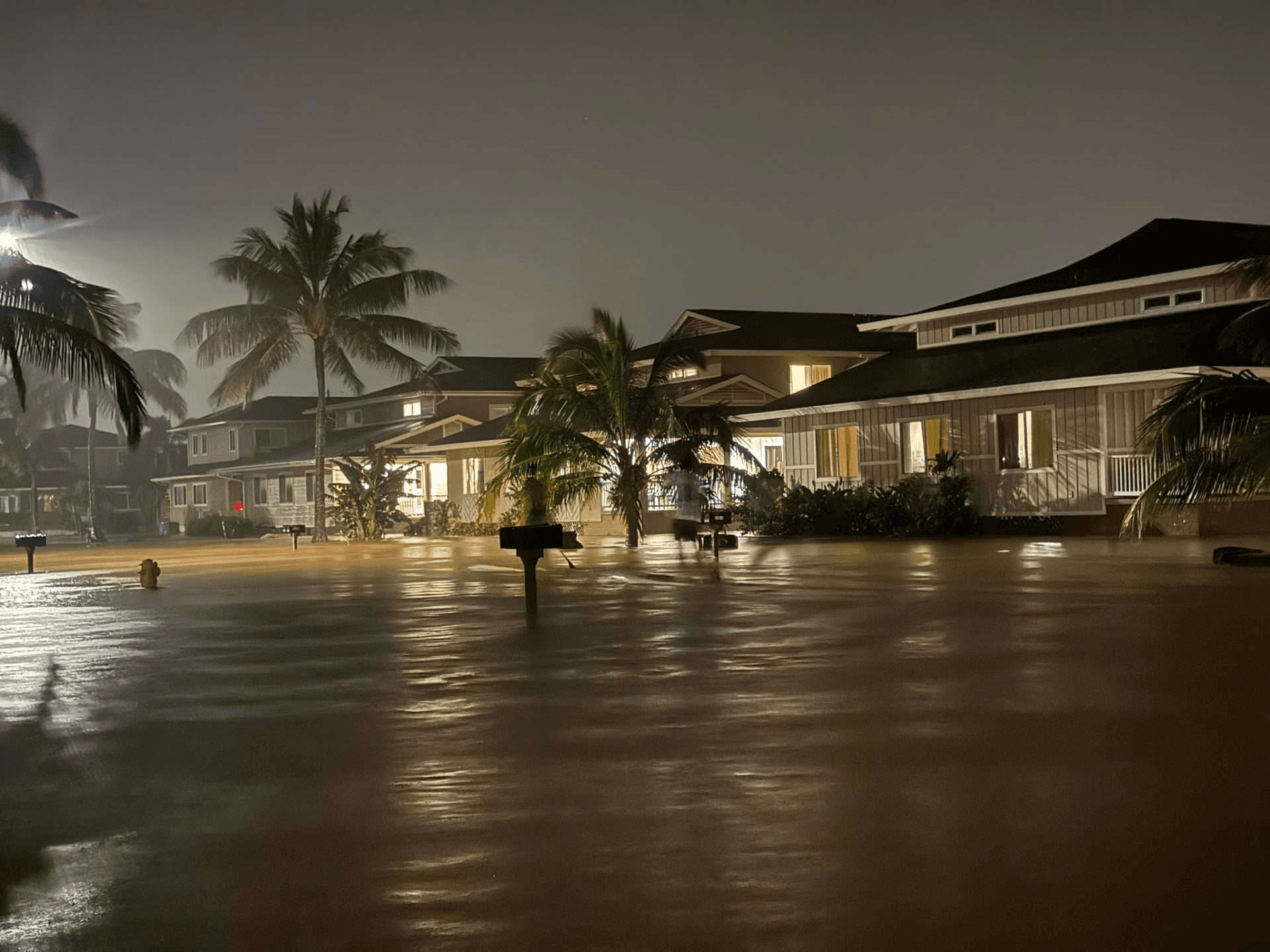
Kama started as a response to a flood and turned into the most honest design work I've ever done. The Google UX Certificate gave me the framework to think in product. The real problem gave me the reason to care. And working with Claude as a thinking partner let me move fast without losing the thread.
I don't know if Kama ships. I don't know if the pickup code works or if the Kama-aina ranking idea survives contact with reality. What I know is that for the first time I'm asking the right questions before reaching for Figma.
That feels like the thing I was missing. And this project is proof I can do it.